Living in Alamo Heights, Texas | Central San Antonio Community Guide
Alamo Heights is the most distinct community in the San Antonio metro. It has its own city, its own top-ranked school district, and a neighborhood character that no master-planned suburb can replicate. It also comes with a price point and a specific type of home that rules it out for a lot of buyers. Here’s who it’s actually right for.
→ New to the area? Start with the San Antonio Relocation Guide
Alamo Heights at a Glance
| Location | Central San Antonio — an independent city entirely surrounded by the city of San Antonio, just north of downtown |
| City Status | Incorporated city with its own government, police department, and school district — not a neighborhood of San Antonio |
| County | Bexar County |
| School District | Alamo Heights ISD — single unified district serving the entire city; consistently ranked among the top districts in Texas |
| Typical Home Price Range | $450K–$900K for most single-family homes; $1M–$4M+ for larger custom and estate properties |
| Home Styles | Historic cottages, mid-century ranches, custom renovations, and newer custom builds — no production or master-planned construction |
| Lot Sizes | Smaller than outer suburbs — typically 6,000–10,000 sq ft; some larger estate lots exist but are uncommon |
| Commute to Downtown SA | 10–15 min — one of the closest residential areas to downtown in the metro |
| Commute to Medical Center | 15–20 min |
| Commute to The Pearl / Museum Reach | 5–10 min |
| Commute to JBSA-Fort Sam | 10–20 min — one of the best locations in the metro for Fort Sam families |
| Commute to JBSA-Lackland | 25–35 min |
| Vibe | Walkable, tight-knit, established — feels like a small town nested inside a major city |
| New Construction | Very rare — occasional custom teardown/rebuilds; primarily a resale and renovation market |
| Walkability | Among the most walkable residential areas in San Antonio — schools, parks, dining, and shops within walking distance for many residents |
| Nearest Airport | San Antonio International, ~15–20 min |
What It’s Actually Like to Live in Alamo Heights
Alamo Heights is 4.2 square miles. The entire city could fit inside some of the master-planned communities we’ve covered on this site. Everything you need is close, everything feels walkable by San Antonio standards, and the school district is unified across the whole city so there’s no anxiety about which boundary line your street is on.
Daily life here has a rhythm that you don’t find in outer suburbs. Kids actually walk or bike to school. Neighbors know each other. The same families show up at the same coffee shop, the same school events, and the same Friday night football games. The Broadway corridor and Austin Highway give residents local dining and retail without driving to a strip mall 15 minutes away. And the Pearl District, the San Antonio Museum of Art, and downtown itself are close enough to be part of regular life rather than occasional destinations.
The homes are the other thing that sets Alamo Heights apart. You’re not shopping for a house that looks like every other house on the block because every house in a neighborhood was built the same year by the same builder. You’re shopping for a specific home with its own character: a 1940s cottage with original hardwood floors, a mid-century ranch on a corner lot, or a thoughtfully renovated 1960s build with a modern kitchen and the original oak in the backyard. Every home has a history. That’s either deeply appealing to you or it isn’t, and it’s worth knowing which one you are before you start looking here.
What to Know Before You Commit to Alamo Heights
Price per square foot in Alamo Heights is among the highest in the San Antonio market. You are paying a significant premium for the school district, the location, the character, and the fact that inventory is tight and demand never really goes soft. A $700K home in Alamo Heights is typically smaller and older than a $700K home in Stone Oak or Boerne. Buyers who get frustrated here are usually the ones who compare square footage across zip codes rather than comparing what $700K buys in terms of location, walkability, and school access.
Older homes require maintenance budgets that newer construction doesn’t. If you buy a 1950s cottage, you need to go in knowing about what a renovation or ongoing maintenance commitment looks like. Many buyers factor in a renovation budget alongside the purchase price, and the best transactions I see in Alamo Heights are the ones where families are prepared for that from the start.
Lot sizes are small. If a big backyard, an RV pad, a workshop, or any meaningful outdoor space is on your list, Alamo Heights will feel tight. This is an urban-adjacent community and the lots reflect that.
Parking is the other thing to note. Streets are narrower than new suburban construction, driveways are shorter, and garages on older homes weren’t designed for two modern SUVs (or they’ve been converted to living space). It’s manageable, but it’s different from what most relocating families are used to.
Who Alamo Heights Is Right For (And Who It Isn’t)
Alamo Heights tends to be a great fit if:
- The school district is your single most important priority and you want the best unified public school option in San Antonio without private school tuition
- You want to live close to the city — downtown, the Pearl, the museums, Fort Sam — and actually use San Antonio rather than just live near it
- Character matters to you more than square footage — you’d rather have a home with history and personality than a larger home with builder-grade finishes
- You’re assigned to JBSA-Fort Sam Houston — Alamo Heights is one of the closest and most desirable residential options for Fort Sam families
- Walkability is a genuine lifestyle priority, not just a nice-to-have
- You’re buying for long-term ownership — Alamo Heights holds value consistently and resale demand rarely softens
- Your budget starts at $500K and you understand you’re buying location and district, not square footage
Alamo Heights might not be the right fit if:
- Square footage is a priority — you will get significantly less space per dollar than in outer suburbs
- New construction is important — this is almost entirely a resale and renovation market
- You want a large yard, acreage, or any rural feel — this is a compact urban-adjacent community
- You’re commuting daily to Lackland or the far northwest side — the location that makes Alamo Heights great for some commutes makes others longer
- Your budget is under $450K for a single-family home — options exist but are very limited and highly competitive
- HOA-free living matters for lifestyle flexibility — most of Alamo Heights has no HOA, but the city itself has historic preservation considerations that affect some renovations
What Different Budgets Get You In Alamo Heights
This is the market in San Antonio where the budget conversation is most important to have upfront. What you can buy here is genuinely different from what the same money gets you elsewhere, and families who understand that going in tend to be much happier with the outcome.
$450K–$600K — Entry-level for single-family homes in Alamo Heights. Expect smaller square footage — typically 1,200–1,800 sq ft — in older homes that may need updating. Cottages, smaller ranches, and compact 3-bedroom homes in good locations. The school district access and location value is identical to a $1.5M home on the same block. For families prioritizing the district over the house size, this range is very workable.
$600K–$850K — The heart of the market for most relocating families. Homes in the 1,700–2,400 sq ft range, better condition, some with renovations completed. This is where you start finding homes that have been thoughtfully updated — modern kitchens in classic structures, renovated bathrooms, newer systems — while still carrying the original character that makes Alamo Heights distinctive.
$850K–$1.2M — Larger homes, premium lots, and the more extensively renovated or custom-influenced properties. You’re starting to see 2,500–3,500 sq ft homes with high-end finishes that don’t compromise the neighborhood character. This range is competitive and moves quickly when priced correctly.
$1.2M–$2M+ — Custom renovations, estate-sized lots for Alamo Heights, architecturally significant homes, and the most desirable streets. At this level you’re comparing against luxury suburban homes elsewhere and making a deliberate lifestyle choice — the value here is location and school district, not raw square footage.
$2M+ — The top of the Alamo Heights market. Fully custom builds, rare large-lot properties, and homes that represent the absolute best of what this community offers. Limited inventory, serious buyers only.
Buyers with budget flexibility who want established character at a larger lot size often compare Alamo Heights to Shavano Park. It’s within a different school district, different location, similar established residential feel at a somewhat lower price point.
Schools in Alamo Heights
Here’s what makes Alamo Heights ISD different from every other school district in this guide: the entire city feeds into one district, and that district feeds into one high school. There’s no boundary anxiety, no worrying that the house one street over is in a different elementary zone, no researching which part of town gets you the campus you want. If your address is in Alamo Heights, your kids go to Alamo Heights schools. That simplicity is genuinely unusual in the San Antonio market and it’s one of the underappreciated advantages of choosing this community specifically.
Alamo Heights High School consistently ranks among the top public high schools in Texas — strong academics, dual credit and AP programs, competitive athletics, and a college placement record that reflects a community deeply invested in education. The elementary and middle schools feed into that pipeline from the start. For families where school quality is the primary driver of the relocation decision, this district is the clearest answer in the San Antonio metro.
Schools include:
-
Alamo Heights High School
-
Alamo Heights Junior School
-
Woodridge Elementary
-
Cambridge Elementary
-
Howard Early Childhood Center
Families specifically targeting Alamo Heights ISD should also understand that the district is small and walkability is part of what makes it distinctive. Buyers who want that school district in a larger-lot or newer construction setting will not find it here, and Boerne ISD or Northside ISD communities offer different trade-offs worth understanding.
Popular Areas/Neighborhoods in Alamo Heights
Living in Alamo Heights feels less like a suburb and more like a self-contained neighborhood woven into the heart of San Antonio. Streets are lined with mature trees, schools anchor the community, and daily life often revolves around nearby parks, coffee shops, and local events.
Unlike fast-growing outer suburbs, Alamo Heights changes slowly, which is exactly why many buyers choose it. It’s a place where long-term ownership, pride of maintenance, and consistency matter.
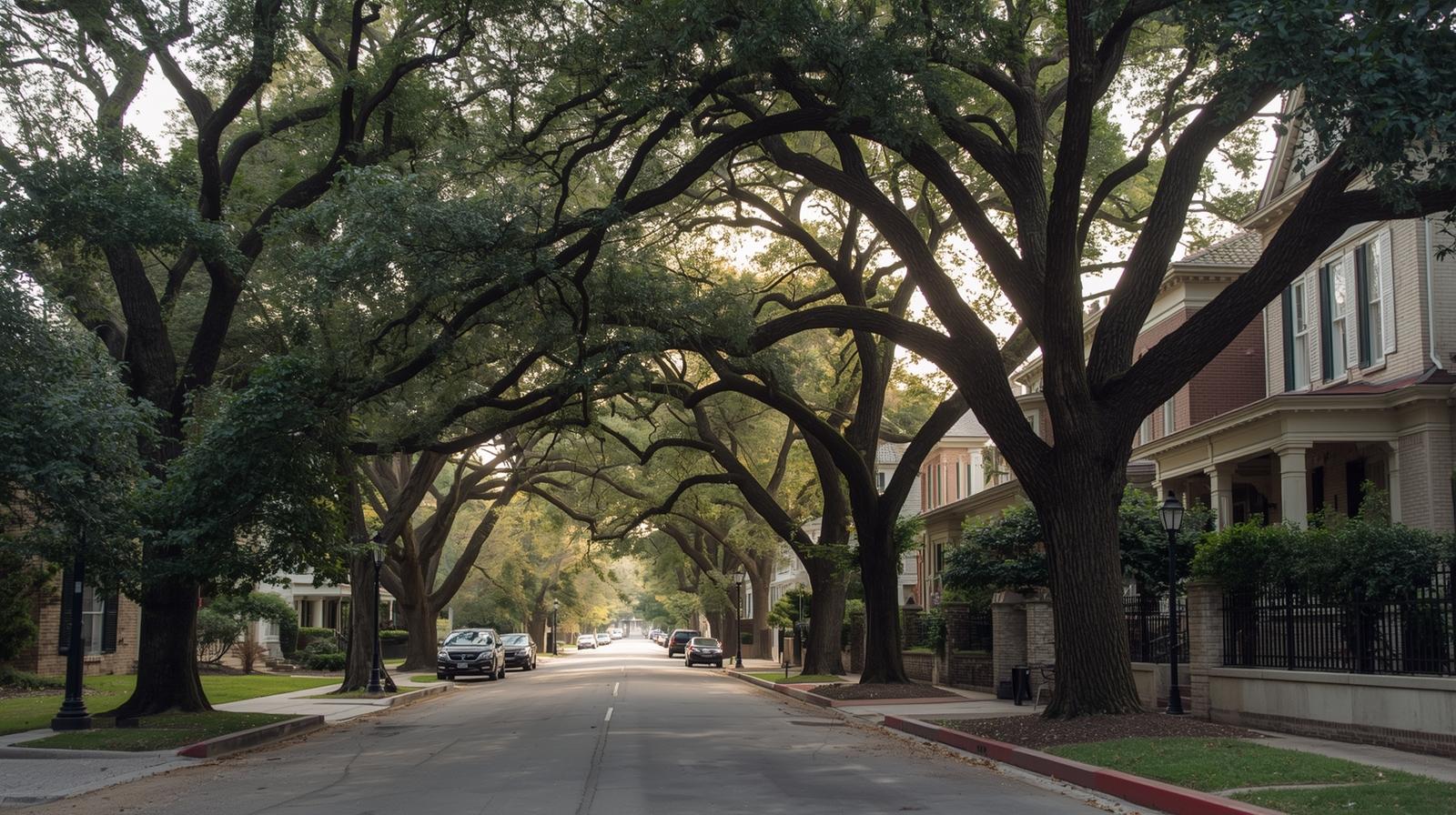
Old Alamo Heights
The original residential core of the city, with streets developed primarily in the 1930s through 1960s. Homes here are the most architecturally varied — Tudor cottages, Spanish eclectic, mid-century ranch — and the lots tend to have the most mature landscaping. This is where you find the homes that feel most distinctly “Alamo Heights” in character. Prices vary enormously by condition and lot, but expect $600K–$1.5M+ for most single-family homes. Inventory turns slowly because people don’t leave easily.
Upper Broadway Corridor
The stretch along and near Broadway as it runs north through Alamo Heights has some of the city’s most desirable addresses — both for residential proximity to dining and retail, and for the mix of classic and thoughtfully renovated homes that line the streets just off the main corridor. Buyers who want walkability to coffee, dinner, and local shops on a Tuesday evening tend to gravitate toward streets in this area. Pricing is competitive and reflects the location premium within an already premium market.
Terrell Hills Border Area
Homes along the eastern edge of Alamo Heights, near the Terrell Hills boundary, often appeal to buyers who want more lot size and a slightly quieter residential feel while staying in Alamo Heights ISD. This area can offer a bit more space per dollar than streets closer to the school campuses. Worth exploring specifically if lot size is a constraint elsewhere in the search.
Near Central Market + Quarry Area
The western and southwestern edges of Alamo Heights near the Quarry Market give residents immediate access to one of the most practical retail clusters in central San Antonio — Central Market, the Quarry shopping center, and multiple dining options — while staying within the AHISD boundaries. Popular with buyers who want Central Market as a literal neighbor and don’t mind the trade-off of slightly more traffic proximity.
Alamo Heights Compared to Nearby Suburbs
Buyers considering Alamo Heights are rarely looking at just one zip code. Because of its central location, strong school district, and established character, Alamo Heights is often researched alongside a few nearby areas that offer similar access – but very different lifestyles. Some share school districts, others share proximity, and some simply attract buyers at the same stage of life for different reasons.
Understanding how these areas differ helps families make a confident, informed decision, especially when relocating to San Antonio.
Alamo Heights vs. Terrell Hills
Terrell Hills is immediately adjacent and shares the Alamo Heights ISD boundary for most of its footprint — which means some Terrell Hills addresses are zoned to AHISD and others are not, making address-by-address verification essential there. Terrell Hills tends to have larger lots and more estate-scale homes, with a quieter and more exclusively residential character. Alamo Heights has more walkable energy, more retail and dining immediately accessible, and a stronger unified community identity. Buyers who want the AHISD district and more lot space often explore both cities simultaneously and make the call based on specific properties.
Alamo Heights vs. Olmos Park
Olmos Park is the comparison that comes up most often, and it’s a good one. Olmos Park is also an independent city surrounded by San Antonio, also served by Alamo Heights ISD for most of its addresses, and has its own estate-feel character with larger lots and a quieter residential pace. The trade-off: Olmos Park is slightly less walkable and doesn’t have the same density of local dining and retail immediately accessible. Alamo Heights has more community energy and a more defined neighborhood identity. Both are excellent — the choice often comes down to whether you prefer Alamo Heights’ connected, active feel or Olmos Park’s quieter, more private character.
Alamo Heights vs. Monte Vista / Midtown
Monte Vista and Midtown are for buyers who want the historic character and proximity to downtown without the specific Alamo Heights ISD premium. Both have gorgeous architecture — Monte Vista is one of the most architecturally significant historic neighborhoods in Texas — but they’re within San Antonio city limits and served by SAISD rather than AHISD. If school district is your primary driver, that distinction matters significantly. If you want historic charm and downtown proximity and your kids are grown or in private school, Monte Vista and Midtown offer extraordinary value compared to Alamo Heights pricing.
Alamo Heights vs. Stone Oak
Different buyers, different priorities, almost never the same person truly debating both. Stone Oak is newer, larger homes, more suburban structure, and in the north SA corridor with all that implies for commutes and lifestyle. Alamo Heights is older, smaller homes, urban-adjacent, and central. The school districts are both excellent but operate completely differently — NEISD is a large multi-campus district; AHISD is a single small-city district with one high school. Buyers who’ve done their research tend to self-select clearly between these two. If you’re genuinely stuck between them, it’s usually worth visiting both on a weekday afternoon before deciding.
Getting Around Alamo Heights + Daily Commutes
Commute to Downtown SA
Alamo Heights’ central location makes it one of the strongest commute options for Fort Sam Houston families. The PCS to Fort Sam Houston guide covers the full neighborhood picture for that installation.
Commute to The Pearl / Museum Reach
5–10 minutes. The Pearl District is essentially a neighbor. Many Alamo Heights residents walk or bike to the Pearl on weekends.
Commute to Medical Center
15–20 minutes via US-281 or Loop 410. Manageable for most Medical Center employees, though not as convenient as Stone Oak for that specific commute.
Commute to JBSA-Fort Sam Houston
10–20 minutes depending on exact neighborhood and time of day. One of the best locations in the metro for Fort Sam families. The combination of Fort Sam proximity, top schools, and neighborhood quality makes Alamo Heights a popular choice for senior officers and civilian employees at the installation.
Commute to JBSA-Lackland
25–35 minutes. Workable for daily commuters, though families at Lackland who don’t specifically need the Alamo Heights school district or central location often find better value on the northwest or southwest side.
Local Navigation
Most daily errands within Alamo Heights and immediate surroundings don’t require highway access. The street grid is navigable, parking is manageable for most purposes, and the walkability of the city means many residents drive significantly less than in outer suburbs. That said, the city’s small footprint means you’re still driving for anything beyond immediate neighborhood needs.
Pros & Cons of Living in the Alamo Heights Area
Why Buyers Love Alamo Heights
-
Highly ranked public schools (Alamo Heights ISD)
-
Central location close to downtown and major employers
-
Strong resale value and long-term demand
-
Walkable streets and established neighborhoods
-
Distinct community identity
Things to Consider About Alamo Heights
-
Higher home prices than most San Antonio suburbs
-
Limited inventory and competitive market
-
Older homes may require updates or renovations
-
Smaller lot sizes compared to outer suburbs
Things to Do Around Alamo Heights
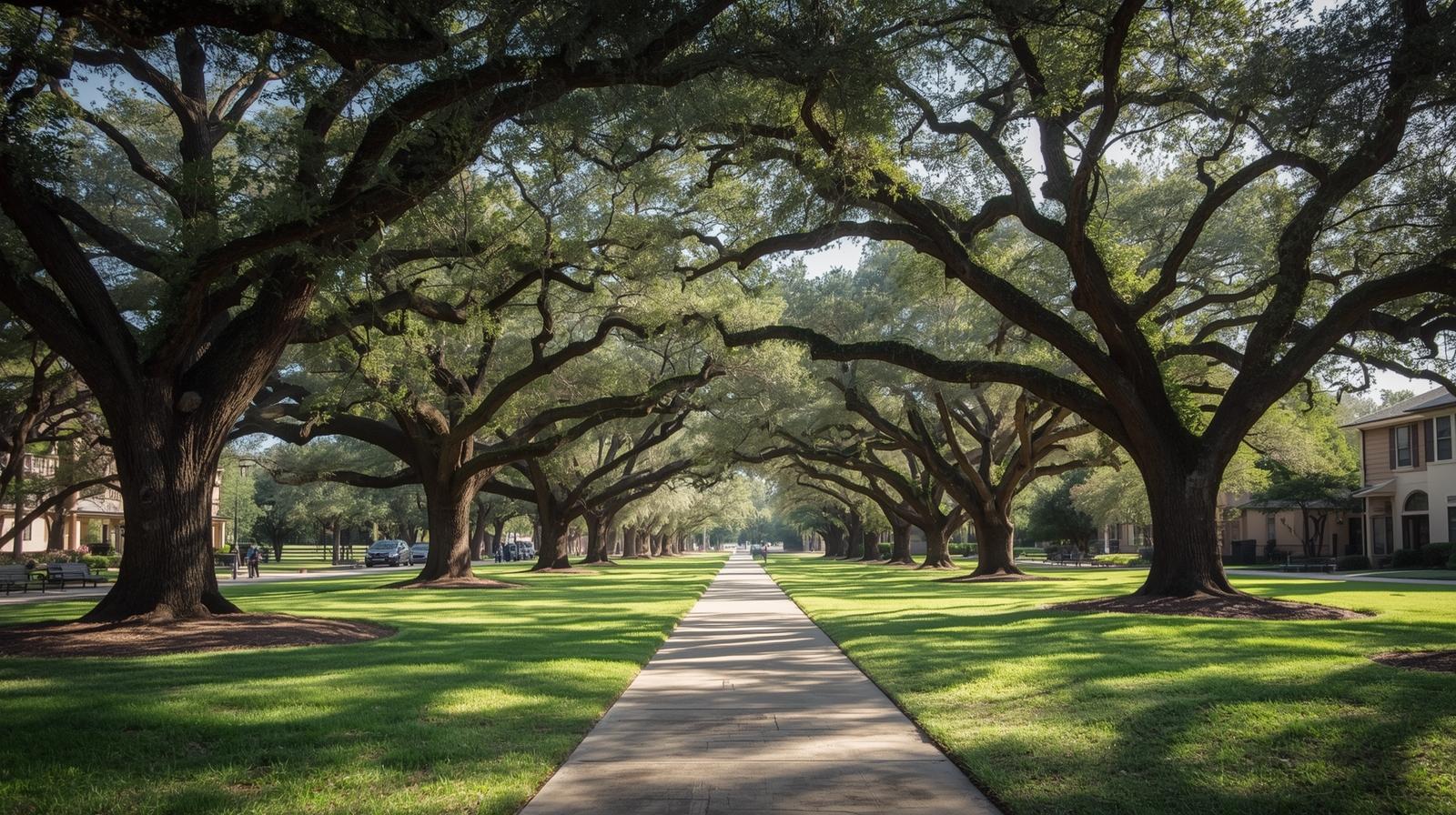
Parks + Green Space
Alamo Heights punches above its weight on parks for a city its size. Crockett Park — right in the middle of the city — is the community gathering point: soccer fields, playgrounds, picnic areas, and the kind of Saturday morning scene where you’ll run into half your neighborhood. Olmos Basin Park runs along the eastern edge and offers more natural trail space. And because of the city’s central location, Brackenridge Park, the San Antonio Zoo, and the entire Museum Reach of the River Walk are minutes away — amenities most suburbs don’t have within 30 minutes.

Dining + Local Favorites
The dining scene accessible to Alamo Heights residents is genuinely one of the best arguments for the location. Broadway running south into the Pearl, Austin Highway heading east, and the immediate Alamo Heights strip itself have a concentration of independently owned restaurants, coffee shops, and bars that would make most Texas cities envious. This isn’t chain restaurant territory — it’s the kind of neighborhood where long-running local spots have regulars who’ve been coming for 20 years. For families relocating from food-forward cities, this is often the pleasant surprise about San Antonio that nobody mentioned.
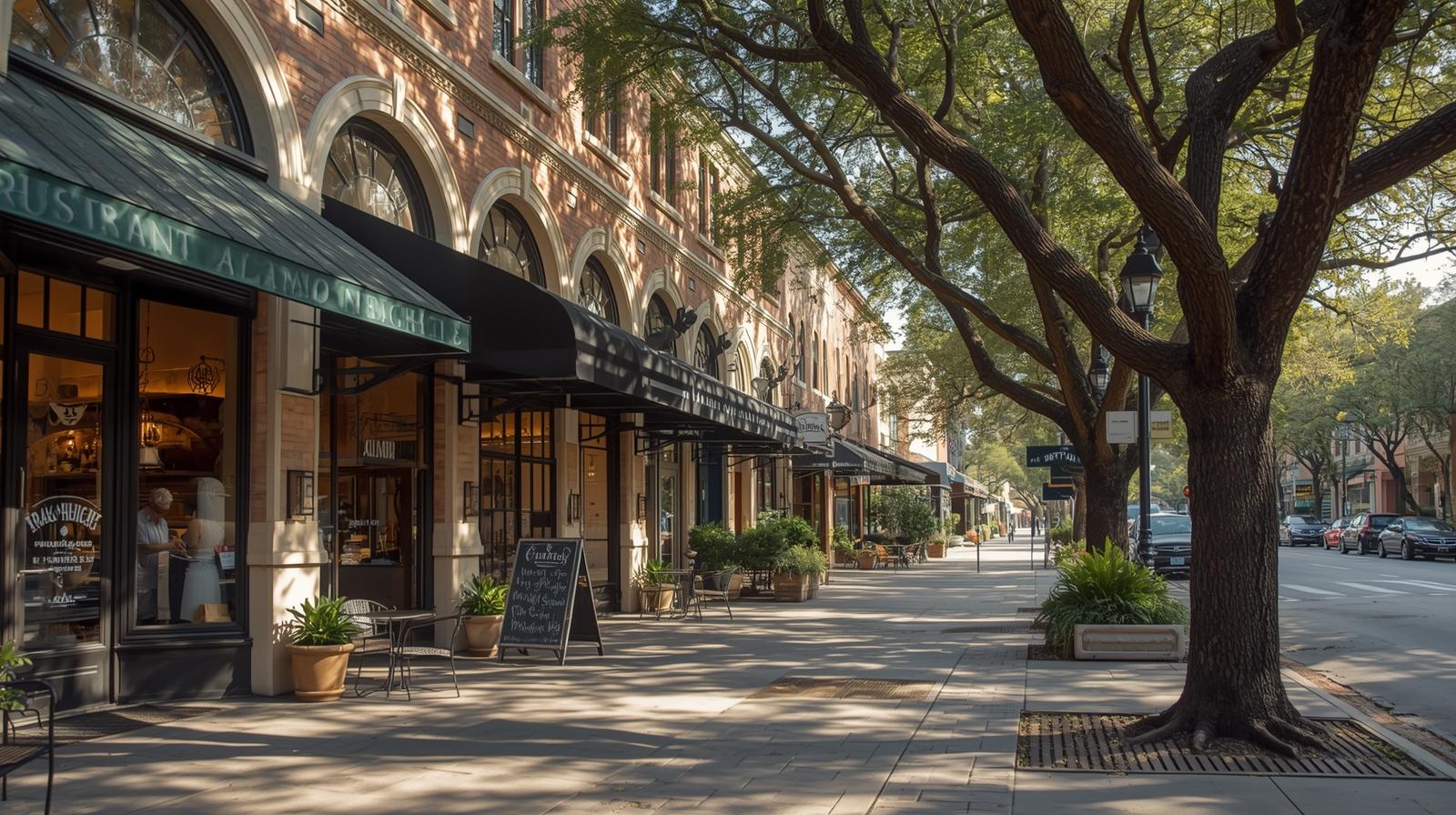
Culture + Events
The San Antonio Museum of Art sits at the edge of the Pearl, minutes from Alamo Heights. The McNay Art Museum — one of the most beautiful art museum settings in Texas — is in the neighborhood. Downtown’s cultural offerings: the missions, the River Walk, the Majestic Theatre, Spurs games — are all genuinely close in a way they aren’t from Stone Oak or Boerne. Families who want to actually engage with San Antonio’s cultural life rather than just live near it will find Alamo Heights’ location makes that easy in a way that outer suburbs simply can’t match.
Frequently Asked Questions About Alamo Heights
Is Alamo Heights, TX a good place to live?
Alamo Heights is one of the most desirable addresses in San Antonio for the buyer it fits: someone who values walkable neighborhood character, a top-ranked unified school district, a central location, and a community that feels like a real place rather than a planned development. It is also one of the most expensive communities in the metro and offers almost exclusively established resale inventory. For the right family the combination is hard to beat. For buyers who need newer construction or a lower price point, the math rarely works.
What school district is Alamo Heights in?
Alamo Heights is served by Alamo Heights ISD, a small unified school district that consistently ranks among the top in Texas. The district serves only the Alamo Heights community and is not accessible from neighboring areas. If Alamo Heights ISD is your priority, you need to buy within the city limits. Always verify zoning by specific address.
How far is Alamo Heights from downtown San Antonio?
Alamo Heights sits approximately 4 to 6 miles north of downtown San Antonio. The drive runs 10 to 20 minutes depending on traffic and specific destination. It is the closest established residential community to downtown that offers top-tier school district access.
Is Alamo Heights expensive?
Yes. Alamo Heights is among the most expensive communities in the San Antonio metro. Most single-family homes start in the mid $500Ks and run well into the millions for larger or renovated properties. The premium reflects the school district, the location, the walkable character, and the scarcity of comparable inventory anywhere else in the city.
What is Alamo Heights known for?
Alamo Heights is known for its top-ranked school district, its walkable neighborhood streets, its independent city status within San Antonio, and a community identity that has remained distinct despite being surrounded by a city of over a million people. It has a strong arts and culture presence, well-established local businesses, and a reputation as one of San Antonio’s most stable and sought-after residential addresses.
Explore Homes for Sale in Alamo Heights
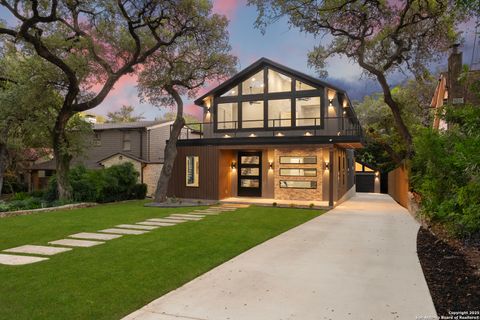
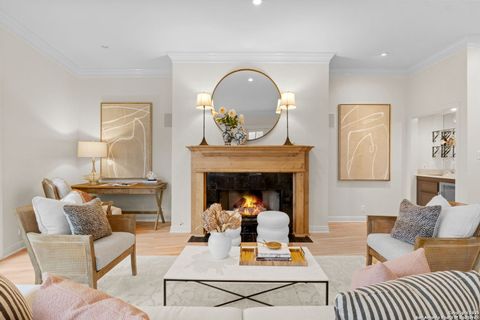
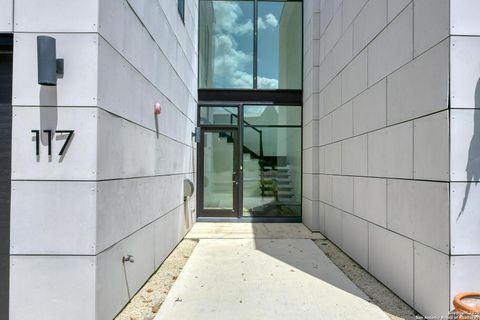
Alamo Heights inventory is genuinely unlike anything else in this guide. You’re not shopping for a home type — you’re shopping for a specific home, with its own history, character, and condition. The listings below will show you that the price range here is wide ($450K for a smaller cottage to well over $2M for a custom estate) and that square footage alone doesn’t tell you much about value. What matters is lot position, condition, renovation quality, and street location — all things that are hard to assess from a listing photo but become clear quickly when you look at enough of them. Browse below to start developing your eye for what fair value looks like in Alamo Heights, and reach out when you’re ready to have a real conversation about what’s worth pursuing.




Still comparing central SA options?
These guides can help you think through the full picture:
Also comparing nearby areas?
Alamo Heights is the most consistent recommendation for families relocating from New York and the Northeast who want walkable neighborhood character in a San Antonio context.
Full San Antonio relocation overview
For buyers who want Alamo Heights character but find the price point or housing stock doesn’t fit, Stone Oak and Shavano Park are the most common alternatives that come up in that conversation.
Looking for Something More Specific?
Some buyers come into Alamo Heights with a very specific wish list. If that’s you, these searches can help narrow the field without losing sight of what makes this area so desirable.
Considering Alamo Heights? Let’s Make Sure It’s the Right Fit.
Alamo Heights is specific. The school district, the price point, and the housing stock mean it works well for a narrow buyer profile and less well for everyone else. A quick conversation before you fall in love with a listing is worth it.
I’ve helped families find their fit in Alamo Heights and across the central SA corridor. I grew up just outside San Antonio in Seguin and have lived here for 20+ years.
Schedule a Free Relocation Call
📞 210.236.2393 · ✉️ tammy@livinginsatx.com
Explore more: San Antonio Suburbs · Stone Oak · Shavano Park · PCS to Fort Sam Houston · San Antonio Schools · Where to Live in San Antonio
Tammy Dominguez | San Antonio Realtor® & Relocation Specialist | License #684278 | Realty United, LLC