← Back to the San Antonio New Construction Guide
Building a Custom Home in San Antonio & the Texas Hill Country
Custom building gives you a lot more control over the home you end up with, but it also comes with decisions that most resale and production-home buyers never have to think about. Land, utilities, site costs, financing, builder selection and the construction timeline all need to make sense together, especially when you’re also trying to coordinate a move to San Antonio.
Custom Building Is a Very Different Kind of Home Purchase
When most people think about new construction, they picture walking through a model home, choosing a floor plan and making selections at a design center. A true custom home, especially if you’re thinking about a Build on Your Own Lot home, usually starts much earlier than that.
Sometimes you already own the land. Sometimes finding the perfect homesite is actually the first step. Either way, the property itself can heavily influence what you’re able to build, how expensive the project becomes and where the house should sit on the lot. That means we may need to think about things like topography, drainage, utilities, access, deed restrictions, trees, rock, septic or well requirements and site preparation before you’re choosing countertops or planning the perfect swimming pool location in the backyard.
So typically, when we’re planning a custom build together, the first step isn’t usually deciding which builder to use. It’s more about figuring out the answers to these questions: What are you trying to build? Where do you want to build it? What will that particular property allow us to do? Once those pieces make sense together, then we can start evaluating the best builders to work with your plans.
Custom vs. Semi-Custom vs. Build on Your Lot
These terms get mixed up frequently, and they don’t always mean exactly the same thing from one builder to another.
A production builder typically offers a set group of floor plans inside a community, with a defined menu of structural and design options.
A semi-custom builder usually gives you more flexibility. You may still start with an existing plan, but there can be more room to modify layouts, finishes, structural elements or features depending on the builder.
A custom builder generally starts much closer to a blank sheet of paper, designing the home around the buyer, the site and the budget.
And then there’s Build on Your Lot, which really describes where the home is being built. Some BOYL builders work from an existing library of plans that can be modified, while others design a completely custom home from the ground up.
It’s important to understand the differences here, because buying land and building on it doesn’t automatically mean you have to create a one-of-a-kind architectural project.
For some buyers, BOYL ends up being a very practical middle ground between a production community and a fully custom home.
Where Custom and Build-on-Your-Lot Buyers Are Looking Around San Antonio
This type of building tends to make more sense once you move outside the most built-out parts of San Antonio. I see the strongest custom build activity in areas like Boerne, Fair Oaks Ranch, Bulverde, Spring Branch, Canyon Lake and the broader Texas Hill Country, where larger homesites and privately owned land are much more common.
That does not mean every Hill Country lot is easy to build on. In fact, sometimes the opposite is true. The most beautiful piece of land, with fantastic views can come with a steep slope, difficult access, expensive utility connections, rock, drainage issues or restrictions that make the project much more complicated than the listing photos suggest.
That’s why I want buyers thinking about the land and the future house together, rather than buying the property first and hoping the build works afterward.
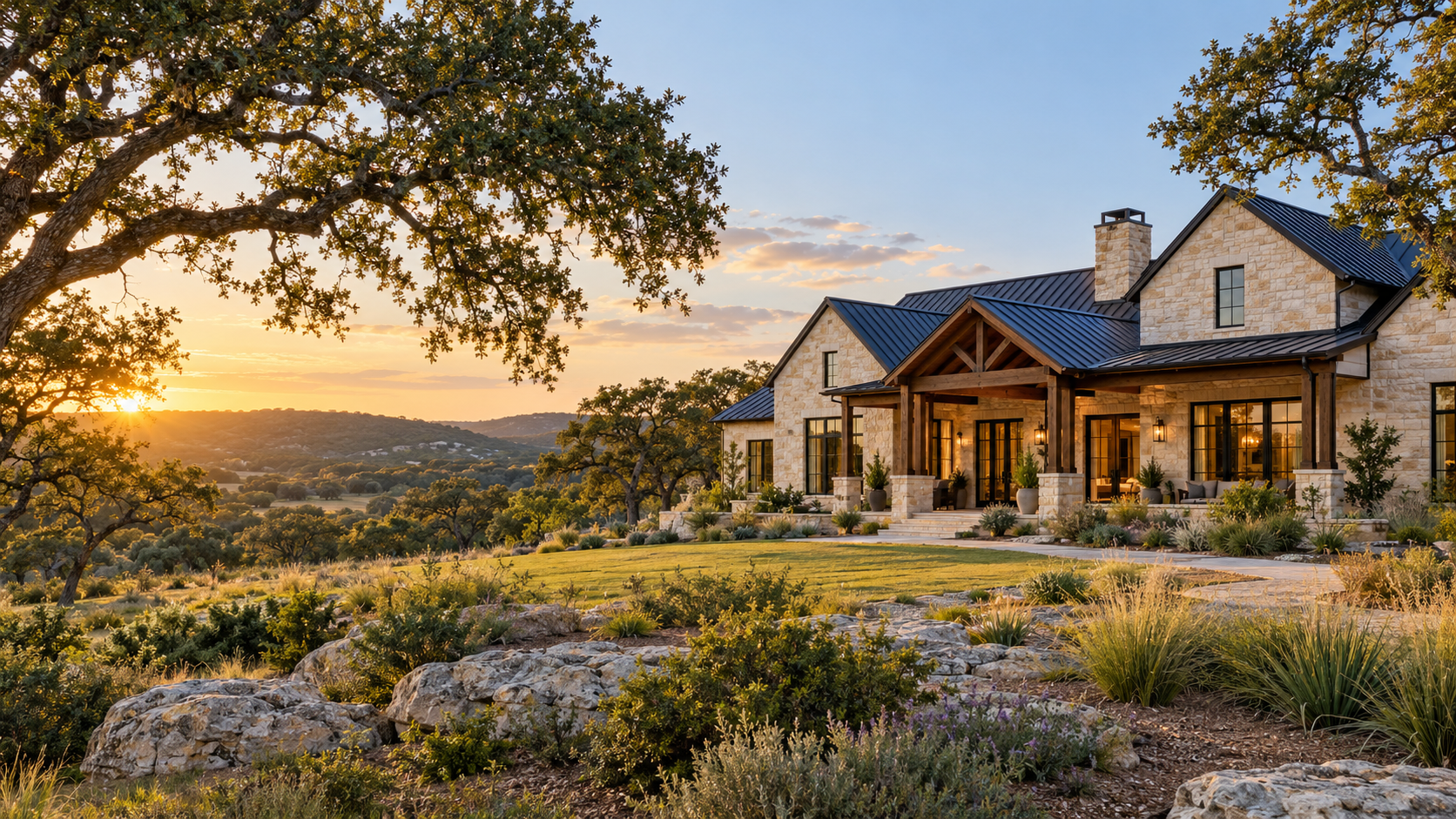
Should You Buy the Land Before Choosing a Builder?
Not necessarily. If you already own the land, then obviously we start with what you have. But if you’re still shopping for a homesite, I’d rather bring the builder or other appropriate professionals into the conversation before you close on the land, whenever the timing and contract allow it.
The purchase price of the lot is only part of the cost. A less expensive piece of land can become a very expensive building site if it needs extensive excavation, a long driveway, utility extensions, major clearing, additional engineering or specialized foundation work.
Meanwhile, a lot that looks less exciting at first glance may leave you with much more room in the budget for the actual house. This is one of those situations where the cheapest land is not always the least expensive project.
What Does It Really Cost to Build on Your Own Lot?
This is where I want buyers to be careful with price-per-square-foot numbers. They can be really useful for a rough comparison, but they do not tell you what the entire project is going to cost.
Depending on the property and the builder, your total budget may also include the land, site preparation, driveway and access, utility connections, septic or well installation, engineering, architectural or design work, permits, landscaping, fencing, financing costs and whatever changes or selections you make during construction.
That’s why two buyers can build very similar houses and end up with very different total costs. The house is only one part of the equation. For my clients, I’d much rather understand the realistic all-in budget before we start designing a home that all of a sudden uses every dollar of flexibility we had.
Construction Financing Works Differently
Custom construction financing can also look very different from getting a mortgage on a completed resale home.
Depending on the project, you may be using a construction loan or construction-to-permanent financing where funds are released in stages as the work progresses. That can affect the down payment, how the land is treated, how the builder is paid, how the appraisal works and what happens between the start of construction and the final mortgage.
This is an area where I want a lender who is very experienced in handling construction financing involved early. Not because we need to make the process more complicated, but because financing can affect the land purchase, builder contract and overall project strategy.
Choosing a Custom Home Builder in San Antonio
I would not choose a custom builder based only on beautiful photos of finished houses. Those pictures show what a builder is capable of producing. They don’t tell you much about what it feels like to spend a year working with that company.
I want my buyers to understand the builder’s actual process. How are plans developed? What is included in the quoted price? How are allowances handled? What happens when you change something? How often will you receive updates? What does inspection access look like? How are delays communicated? How are unexpected site costs handled?
And I would never tell a buyer there is one universally “best” custom builder in San Antonio. The right builder for a fairly straightforward BOYL project is not necessarily the right builder for a complicated Hill Country site or a highly customized luxury home.
I’d rather help you compare the specific builder, specific lot, specific project and specific budget than rely on somebody else’s generic ranking of builders.
Understand What Is Included Before You Sign
Custom-home pricing can look very complete on paper while still leaving room for costs to change. Before signing the construction agreement, I want buyers to understand what is actually included in the price, which items are allowances, how site costs are handled, what selections have not been finalized and how change orders work.
An allowance is essentially a budget placeholder for something you haven’t selected yet. If the allowance assumes one level of flooring, fixtures or cabinetry and you choose something more expensive later, that difference can add up quickly across the house. The same goes for changes made after plans or construction are underway.
This is also where I want the builder’s plans, specifications and pricing documents to be as clear as possible. If something is important to you, it should be discussed before you assume it is included.
What Does the Custom Home Building Process Look Like?
The exact order can vary depending on whether you already own land, have chosen a builder or are still figuring out both. Some steps also overlap. But for most buyers, a custom or Build-on-Your-Lot project follows a general path from early planning through construction, inspections and closing.
1. Define the Location, Budget and Type of Build
Before getting too deep into floor plans, I want buyers to be clear on the bigger picture: where they want to build, what kind of home they’re trying to create and what the realistic all-in budget looks like.
That early planning helps narrow down whether a production, semi-custom, custom or BOYL approach makes the most sense and keeps us from making land or design decisions that don’t fit the financial plan.
2. Find and Evaluate the Homesite
If you don’t already own land, this is where the search becomes very different from a typical home search. We’re not only looking at location and price; we’re also paying attention to access, topography, drainage, utilities, restrictions, septic or well requirements and how the home could realistically sit on the property.
Whenever possible, I like to have the builder or other appropriate professionals weigh in before a buyer closes on the lot. The goal is to understand the major site considerations while there is still time to make a different decision.
3. Choose the Builder and Develop the Plan
Once the land and overall direction make sense, the builder can begin turning the idea into an actual project. Depending on the company, you may start with one of their existing plans and modify it, or you may work with a designer or architect to create something completely custom.
This is also when buyers start getting a clearer picture of specifications, allowances, site costs and what is actually included in the builder’s pricing.
4. Finalize Financing, Contract Details and Pre-Construction Work
Before construction begins, the financing and builder agreement need to line up with the project you’re actually planning to build. That may include construction-loan approval, a final budget, plans and specifications, permits, engineering, utility planning and other pre-construction requirements.
This is where I want buyers paying close attention to allowances, site-cost assumptions, upgrade pricing and how change orders will be handled. The more clearly those items are defined before construction, the fewer surprises there are later.
5. Construction Begins and the Major Milestones Start Moving Quickly
Once site work starts, the house progresses through a series of major construction phases: site preparation, foundation, framing, rough plumbing and electrical, roofing, insulation, drywall, finishes and the remaining interior and exterior work.
This is also where independent phase inspections can become valuable. Depending on the project and builder access, buyers may consider inspections before the foundation pour, before drywall goes up and again near completion.
For relocating clients who are still living out of state, this part of the process is often where my local involvement becomes especially helpful. There may be important milestones happening in San Antonio while you’re several hundred miles away.
6. Make Selections and Manage Changes Along the Way
Some design decisions are finalized before construction begins, while others happen as the build progresses. Flooring, cabinetry, fixtures, lighting, appliances, paint and other selections can affect both the finished home and the final cost.
Changes during construction are sometimes possible, but they can also affect pricing and timing. I like buyers to keep track of what has been selected, what has changed and how those decisions affect the overall budget rather than discovering the total impact near the end of the build.
7. Final Inspection, Walkthrough, Closing and Possession
As construction wraps up, the process shifts toward final inspections, builder walkthroughs, punch-list items and preparing for closing. This is when buyers have an opportunity to identify remaining concerns and confirm how unfinished items will be handled.
For relocating buyers, we also need to coordinate the practical side of the move: final walkthrough access, closing, possession, keys and when it actually makes sense to schedule movers or leave temporary housing. A projected completion date can move, so I prefer to keep the arrival plan flexible until the builder and lender are much closer to the finish line.
Independent Phase Inspections During a Custom Build
A brand-new custom home will go through inspections required by the builder, municipality or other governing authority, but I still encourage my buyers to consider hiring their own independent inspector during construction. The advantage of a phase inspection is that the inspector can look at parts of the home while they are still visible instead of waiting until everything has been covered by drywall and finishes.
Depending on the project and what the builder allows, I typically have buyers consider three inspection points. A pre-foundation-pour inspection can take place after the forms and reinforcement are in place but before the concrete is poured. A pre-drywall inspection generally happens after framing and the rough plumbing, electrical and HVAC work are installed but before the walls are closed. Then a final inspection gives the inspector an opportunity to evaluate the substantially completed home before closing.
Some buyers choose all three, while others use a combination based on the project, builder and inspector’s recommendation. The important part is discussing inspection access early because the construction schedule can move quickly once a milestone is reached, and the builder’s contract or policies may determine when independent inspectors can enter the site.
Building a Custom Home While Relocating to San Antonio
This is where the custom-build conversation overlaps heavily with the relocation work I already do.
I’m currently seeing more families move to San Antonio first, rent for a period of time and then build once they’ve had a chance to actually live here and understand which part of the area fits them long term. And for the right buyer, that can make a lot of sense.
You get to experience the commute instead of estimating it from a map. You learn where you will spend most of your time. You figure out whether you really love that Hill Country drive six months later or whether it is entirely too much of a burden.
And most importantly, you can make the land and location decision without feeling like you have to solve your permanent housing situation the same week you arrive. The tradeoff is that custom building requires patience.
Design, permitting, site work, utilities, financing, weather and construction itself can all affect the schedule. So I don’t want relocating buyers treating a projected completion date like it’s the same thing as a guaranteed move-in date.
Together, we can make the custom build process a part of your overall relocation plan, not a separate project happening in the background.
If you’re still living out of state while the home is being built, that coordination becomes even more important because someone needs to keep an eye on the San Antonio side while you’re hundreds of miles away, which is a huge part of my role in the custom build process.
How I Help Relocating Buyers Through a Custom Build
Building a custom home is already a long process, but it becomes a different experience when you’re managing it from another state. A lot can happen between signing the builder contract and getting the keys, and relocating buyers often can’t fly to San Antonio every time there’s a site meeting, construction milestone, inspection or walkthrough.
That’s where my role expands beyond helping you choose the land and builder. I stay connected to the process locally and help coordinate the real estate side of the build as it progresses. That can include keeping track of important milestones, attending appointments or walkthroughs when appropriate, helping coordinate independent phase inspections, communicating with the builder when you can’t be here, documenting what I’m seeing and helping you understand how the construction timeline affects everything else happening with your move.
I’m not taking the place of the builder, construction manager, inspector or lender, but I am another set of eyes on the ground for my clients. When you’re several states away, that can make a huge impact. You shouldn’t have to wonder what is happening with a house you’re investing hundreds of thousands of dollars into simply because you can’t be in San Antonio every few weeks.
For some clients, I’m involved from the land search all the way through final walkthrough and closing. For others, they may already own the land or have a builder selected when they contact me. Either way, I want the build itself, the financing and the relocation timeline working together instead of being treated as three unrelated projects.
Questions to Answer Before You Buy the Land or Sign With a Builder
Before you commit to either the homesite or the builder, I’d want us to have a clear picture of:
- what can legally and physically be built on the property;
- whether utilities are available or whether well, septic or utility extensions will be needed;
- what site-development costs are already known and what is still uncertain;
- deed restrictions, HOA requirements or architectural controls;
- whether the budget includes the land and site work or only the house itself;
- what allowances are included for finishes and selections;
- how change orders are priced and approved;
- the builder’s current estimated timeline for this specific project;
- what inspection access you’ll have during construction;
- how construction financing will work;
- what happens if the build runs longer than expected; and
- how the finished home fits the surrounding resale market.
Frequently Asked Questions About Custom Homes and Build on Your Lot
Do I Need to Own Land Before Contacting a Custom Builder?
No. Plenty of buyers start talking with builders before they purchase land, and in many cases that is actually helpful. A builder may be able to point out site conditions or development costs that aren’t obvious to you when you’re simply walking the property.
If you’re still searching for land, I’d rather have those questions come up before closing than after you already own a lot that creates problems for the home you want to build.
Is Build on Your Lot the Same as Building a Fully Custom Home?
Not necessarily. Build on Your Lot simply means the home is being built on property you own or purchase. Some BOYL builders start with existing floor plans that can be modified, while others design completely custom homes from scratch. The amount of customization really depends on the builder and the type of project.
Is Building in the Texas Hill Country More Complicated?
It can be. Hill Country properties often give buyers more land, privacy and flexibility, but they can also introduce additional questions around topography, drainage, access, utilities, wells, septic systems, site preparation and restrictions.
The important thing is to evaluate the specific property, not assume every acreage or Hill Country lot will work the same way.
Can I Build a Custom Home in San Antonio While Living in Another State?
Yes, but it requires more coordination than buying a completed house. Builder communication, inspections, construction milestones, financing, walkthroughs and closing may all need to happen while you’re somewhere else.
That’s why I want the build timeline connected to the larger relocation plan from the beginning rather than trying to figure out your move after the house is almost finished.
Should I Use a Realtor When Building a Custom Home?
A Realtor does not replace the builder, architect, lender, inspector or attorney. My role is to help you evaluate the real-estate and relocation side of the decision. We’ll talk through location, land, builder options, resale considerations, transaction milestones and how the build fits into your larger move.
For relocating buyers especially, it helps to have someone locally who is still looking at the project with you and representing your best interests.
How Long Does a Custom Home Take to Build?
There isn’t one definite answer that applies to every custom built home. The timeline can be affected by design, engineering, permitting, site preparation, utilities, builder workload, weather and the complexity of the home itself.
I would rely on the builder’s current estimate for the specific project and then build some flexibility into your relocation plan instead of planning your move around a generic timeline you found online.
Should I Get an Independent Inspection on a New Custom Home?
I generally recommend that buyers at least discuss independent inspections with an inspector who has experience with new construction. Depending on the project, that may include pre-pour, pre-drywall and final inspections. Builder and municipal inspections serve their own purposes, while the inspector you hire is evaluating the home for you. Inspection access and timing should be confirmed with the builder early in the process.
Planning a Custom Home in San Antonio or the Hill Country?
You don’t need to own the land or have a builder picked out before we talk. If you’re relocating to San Antonio and considering a custom home or Build on Your Lot project, we can start with the bigger picture. Like where you want to live, what you’re trying to build, what the realistic budget looks like and how the timeline fits into the rest of your move.
From there, we can figure out which decisions need to happen first and who needs to be involved before you commit to anything.
📞 210.236.2393 · ✉️ tammy@livinginsatx.com
Explore more: San Antonio New Construction Guide · Texas Hill Country Living · Buying Acreage Around San Antonio · Well & Septic Guide · Buying a Home Remotely · San Antonio Property Taxes
Tammy Dominguez | San Antonio Realtor® & Relocation Specialist | License #684278 | Realty United, LLC