← Back to San Antonio Relocation Hub
Moving from Dallas to San Antonio, Texas
You already know the Texas fundamentals. What catches most Dallas families off guard is how differently the two cities feel in daily life, and why that difference is usually the whole reason for the move.
Two Texas Cities That Feel Like Different Worlds
Dallas and San Antonio share the obvious Texas fundamentals: the heat, the driving culture, the property taxes, the lack of state income tax. If you’re moving from Dallas, you already know all of that. You’re not going to be surprised by HEB or caught off guard by a 100-degree July.
What catches most Dallas transplants off guard is how differently the two cities feel in daily life.
Dallas is a corporate city in many ways. You have large company headquarters, a professional culture that moves fast, neighborhoods and suburbs that carry a certain status weight, and a pace that reflects all of that. It suits a lot of people very well. It also exhausts a lot of people over time in ways they don’t always pinpoint until they’re somewhere else.
San Antonio is the seventh largest city in the United States and it doesn’t feel like it. The cultural foundation here runs deep: a majority Hispanic city with centuries of layered history, a massive military presence that keeps the community grounded and diverse, and a friendliness in daily life that Dallas transplants consistently mention as one of the first things they notice.
How the Numbers Compare
Since you’re already in Texas, the cost comparison here isn’t about income tax or climate shock, it’s about what your housing budget does differently.
San Antonio’s home prices run below Dallas and its major suburbs across most comparable markets. A budget that buys a standard home in Plano, Frisco, or Southlake buys a larger or better-positioned home in San Antonio’s most desirable suburbs: Boerne, Stone Oak, or New Braunfels, often with more land and a stronger school district per dollar.
The property tax structure is similar between the both areas since you’re staying in Texas. The rates vary by county and school district in San Antonio just as they do in the DFW suburbs. Bexar County, Comal County, and Guadalupe County each run slightly differently. The Cost of Living guide breaks down the full picture.
Everyday costs such as: dining, services, and general expenses, trend lower in San Antonio than in the DFW metro, where the corporate economy has driven prices up in the areas most people want to live. That gap is real even if it’s not as dramatic as the California-to-Texas comparison.
What the Move Actually Looks Like
It’s a full relocation, not a commute situation. At 275 miles and 4-plus hours on I-35, Dallas and San Antonio don’t function as an extended metro area. Families making this move are committing to San Antonio life. That’s worth knowing because the Austin-to-SA move can sometimes be considered a hybrid commute, this one generally can’t.
You’ll find the city easier to learn than you expect. San Antonio’s major suburban corridors: north SA, far west, northeast, each have their own character that becomes noticable quickly. Buyers from DFW who are used to navigating a large, multi-directional metro tend to adapt to San Antonio’s layout without much difficulty.
The Texas Hill Country is a huge differentiator. Dallas doesn’t have it. The Texas Hill Country starts at San Antonio’s edge: Boerne is 30 minutes from the city, the Guadalupe River is 45 minutes, Bandera and Kerrville are an hour. For Dallas families whose outdoor access has been limited to flat North Texas terrain, this proximity to Hill Country landscape is often one of the biggest quality-of-life changes in the move.
Where Dallas Families Actually End Up in San Antonio
The conversations I have with buyers moving from Dallas most often end up in these areas:

Stone Oak
The most natural first stop for buyers from Plano, Frisco, Allen, or McKinney. Established north SA suburban character, strong Northside ISD and NEISD schools, polished retail and dining immediately accessible. Familiar enough in structure for DFW suburban buyers to orient quickly, more affordable than the comparable DFW suburbs they’re leaving.
Dallas buyers who want the polished suburban feel they’re used to in Plano or Frisco typically find Stone Oak and Shavano Park sometimes fit really well. They’re established, well-amenitized neighborhoods in strong school districts.

Boerne
The Hill Country option that attracts Dallas buyers specifically looking for something different from the DFW suburban experience. Real downtown, top-rated Boerne ISD, 30 to 40 minutes from San Antonio. For buyers from the Highland Park or Westlake area who want character alongside suburban quality, Boerne is the closest San Antonio equivalent. Bonus that it also includes Hill Country scenery instead of a tollway view.

Bulverde
More space, Comal ISD, a semi-rural feel north of the city. Suits buyers who want the Hill Country direction without Boerne’s price point, or who specifically want larger lots and a quieter pace than Stone Oak delivers.
Families drawn to the Hill Country side of San Antonio often end up in Boerne, Fair Oaks Ranch, or New Braunfels. All are communities that offer landscape and a slower pace that North Texas simply can’t match.

New Braunfels
River lifestyle, historic downtown, Comal ISD, and a community that has grown significantly while maintaining its character. Appeals to Dallas buyers who want something that feels like a real town rather than a suburban development.
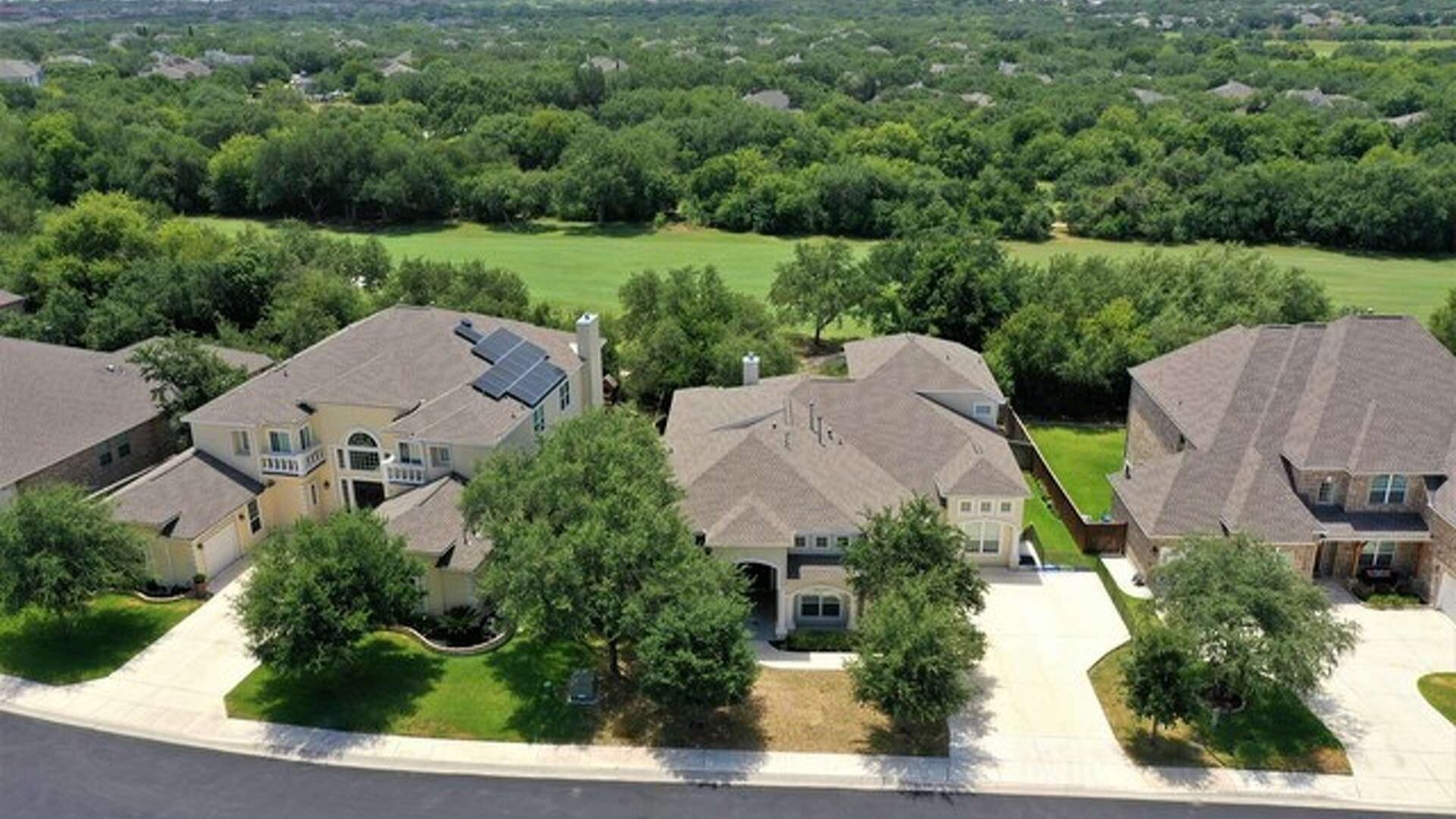
Far West San Antonio
Alamo Ranch and the Potranco corridor attract buyers who want active new construction and strong value at price points below the Hill Country and north SA corridors. For Dallas buyers whose priority is a newer home with full community amenities at the most accessible price, far west SA definitely delivers.
Not sure which of these fits your family’s specific situation?
The Suburb Match Quiz takes about three minutes and gives you a personalized recommendation.
The Where to Live in San Antonio page gives a full breakdown of every part of the city with community types, price ranges, and school districts.
The Free San Antonio Relocation Guide
If you want everything all in one place: suburbs, schools, cost of living, moving timeline, and the mistakes most families make, the free relocation guide covers it.
Moving From Dallas to San Antonio – Frequently Asked Questions
These are the most frequently asked questions that I get from families who are moving from Dallas to San Antonio, Texas.
Is San Antonio cheaper than Dallas?
Generally yes, though the gap is smaller than Texas versus California. San Antonio home prices run below Dallas and its major suburbs across most comparable markets. Both cities share the same Texas tax structure, so no state income tax, and similar property tax rates. Housing cost is where most of the financial difference lives. The cost of living comparison covers the full picture.
What is San Antonio like compared to Dallas?
Dallas is a fast-paced corporate city with a strong status culture and intense suburban development pressure. San Antonio is the seventh largest city in the country that operates at a pace and scale that feels more “small-town” than that ranking suggests. The cultural foundation is different. It’s deeply rooted in Hispanic heritage, military history, and a friendliness in daily life that Dallas families notice immediately. Most people who make this move for lifestyle reasons don’t go back.
What are the best suburbs in San Antonio for Dallas families?
Dallas buyers accustomed to Plano, Frisco, or Allen often gravitate toward Stone Oak for its established suburban character, or Boerne and New Braunfels for something that North Texas cannot offer. Families prioritizing newer construction and value often find Schertz and Cibolo or Alamo Ranch the strongest options.
How long is the drive from Dallas to San Antonio?
About 4.5 to 5 hours via I-35. It’s a long enough drive that it’s a real relocation rather than a commute, but manageable for occasional visits.
Are San Antonio schools as good as Dallas suburbs?
The top San Antonio school districts, Boerne ISD, Alamo Heights ISD, Comal ISD, and Northside ISD, compare favorably with most Dallas-area suburban districts on academic performance. The San Antonio schools guide covers each district in detail.
More San Antonio Relocation Guides
Wherever you’re moving from, the starting point is the same: understanding which part of San Antonio fits your family before you start searching.
San Antonio Relocation Hub · Moving from California · Moving from Austin · Moving from Dallas
Moving from Colorado · Moving from Houston · Moving from the Pacific Northwest · Moving from New York · San Antonio vs. Austin
Ready to Make the Move from Dallas to San Antonio?
You already know Texas taxes, Texas heat, and Texas driving culture. What you probably don’t know yet is which part of San Antonio fits your family. That’s a conversation worth having before you start researching listings.
I’ve helped families make this move from Dallas and the DFW suburbs. Let’s talk through your priorities, your timeline, and which San Antonio communities make sense for where you’re coming from.
Schedule a Free Relocation Call
📞 210.236.2393 · ✉️ tammy@livinginsatx.com
Explore more: Moving to San Antonio · San Antonio Cost of Living · Stone Oak · Boerne, TX · San Antonio Suburbs · Where to Live in San Antonio
Tammy Dominguez | San Antonio Realtor® & Relocation Specialist | License #684278 | Realty United, LLC