← Back to San Antonio Relocation Hub
Moving from Austin to San Antonio, Texas
Austin families have a built-in advantage over out-of-state buyers: you already know Texas. What you don’t know yet is why San Antonio feels like a completely different city despite being 80 miles down I-35.
Why People Are Leaving Austin for San Antonio
Austin’s trajectory over the past decade has been huge. And for a lot of families, that’s exactly the problem. The city that attracted people with its affordability, its music scene, its outdoor access, and its distinctive character has become one of the most expensive metros in Texas. The traffic has grown with the population. The cost of living that made Austin feel like a secret has become jsut the opposite of that.
San Antonio has watched that happen from 80 miles south and quietly absorbed a steady stream of families observing that the things they originally loved about Austin are more available here now than they are there.
The reasons people make this move tend to fall into a few categories.
Cost. Housing in San Antonio runs significantly below Austin across comparable markets. The budget that buys a median Austin home buys a larger, newer home in San Antonio’s most desirable school districts, often with money left over. For families who bought in Austin years ago and are looking at what their equity does in a different market, the numbers are surprising.
The San Antonio cost of living guide runs the full side-by-side comparison including housing, property taxes, and everyday costs across both cities.
Work. San Antonio’s job market has grown substantially. Military and federal employment, a large healthcare sector anchored by the South Texas Medical Center, USAA and financial services, and an expanding broader economyhave all contributed to that. For families whose employer is relocating operations, who are changing industries, or who have found remote work has untethered them from Austin’s job market, San Antonio offers a full employment landscape without Austin’s cost of living.
A different pace and culture. This one is harder to describe, but it comes up consistently. Austin has developed a very specific identity over the past decade: fast-moving, expensive, culturally loud in a particular direction. San Antonio is a bigger city by population but operates at a different pace. It’s more culturally rooted through deeply Hispanic heritage, strong military identity, and diversity that runs through the city’s DNA. For families who feel like Austin has changed in ways that no longer suit them, San Antonio often feels like a more grounded version of Texas.
What You Already Know (and What’s Still Different)
Austin transplants have a built-in advantage over out-of-state buyers: you already know Texas. You know the heat. You know HEB. You know property taxes. You know that you’re going to drive everywhere here and that’s just how it works.
What’s different in San Antonio than what you’re used to in Austin:
The city layout. San Antonio is organized differently than Austin. Rather than radiating from a central core the way Austin does around downtown and South Congress, San Antonio sprawls in multiple directions with distinct suburban corridors that each have their own character. The north SA corridor, the far west side, the northeast: these feel less connected to a central identity than Austin’s neighborhoods do. It’s just a different kind of city to learn.
The cultural center of gravity. San Antonio’s identity is anchored differently than Austin’s. The River Walk is the tourist version of the city. The actual daily cultural life is in its neighborhoods, its food scene, its festivals, and its deep ties to Tejano, Mexican, and military culture. It’s diverse in a way that reflects the city’s history rather than its recent growth.
The tech scene is smaller. Austin’s tech industry concentration is one of the things that drove its growth and its cost increases. San Antonio does have a tech presence. Cybersecurity in particular has a big footprint, partly driven by military and government work, but it’s not Austin’s scene. If your career is specifically tied to Austin’s tech ecosystem, that’s a consideration for a San Antonio move.
New Braunfels sits in the middle. Worth mentioning specifically for Austin transplants: New Braunfels is 45 minutes from Austin and 35 to 50 minutes from San Antonio depending on your destination within SA. For families who need to maintain Austin access: hybrid commuters, frequent Austin travelers, people with family there, New Braunfels is worth considering as a location that keeps both cities within reach without being fully committed to either.
The Commute From San Antonio to Austin
I-35 between San Antonio and Austin is one of the most congested stretches of highway in Texas. That’s not going to change soon. A daily Austin commute from San Antonio is significant at 1.5 to 2.5 hours each way is not unusual during peak hours.
For hybrid workers doing two or three days per week in Austin, it’s more manageable. Many people in this situation describe it as an acceptable trade-off for what their housing budget does in San Antonio. For full-time Austin commuters, it’s worth running the real commute before committing to a San Antonio address.
The families who make this work most successfully tend to live on San Antonio’s north side – Stone Oak, Bulverde, New Braunfels – which reduces the total I-35 distance and shaves time off each direction.
Where Austin Families Actually End Up in San Antonio
The conversations I have with buyers coming from Austin most often end up in these areas:

Boerne
Hill Country character, genuine town identity, top-rated Boerne ISD schools, and a pace that feels like what a lot of people originally loved about Austin before it changed. About 30 to 40 minutes from San Antonio proper and a manageable distance from I-35 for occasional Austin trips. Runs at a premium relative to other SA suburbs but delivers on what it promises.

Stone Oak
North SA’s most established suburban area. Strong schools, polished retail and dining, shorter drives to most San Antonio employment. Suits Austin transplants who want a complete suburban package and the shortest possible I-35 distance for Austin access.
Austin buyers who want the closest thing to Austin’s suburban character in San Antonio typically gravitate toward Stone Oak and the North East ISD corridor. It’s established, well-amenitized, and familiar in feel.

Bulverde
More space, Comal ISD, a semi-rural feel north of the city. A natural choice for buyers who want more land and a quieter character than Stone Oak without paying Boerne prices. Also shortens the I-35 distance for Austin-direction travel.

New Braunfels
The option that keeps both cities accessible. River lifestyle, Comal ISD, a real historic downtown, and a position between San Antonio and Austin that suits hybrid commuters and families who want to maintain both city connections.
Families who want Hill Country character with dual I-35 corridor access often end up in New Braunfels, which sits between San Antonio and Austin and gives remote workers and frequent Austin travelers a reasonable drive in both directions.
Alamo Ranch and Far West San Antonio
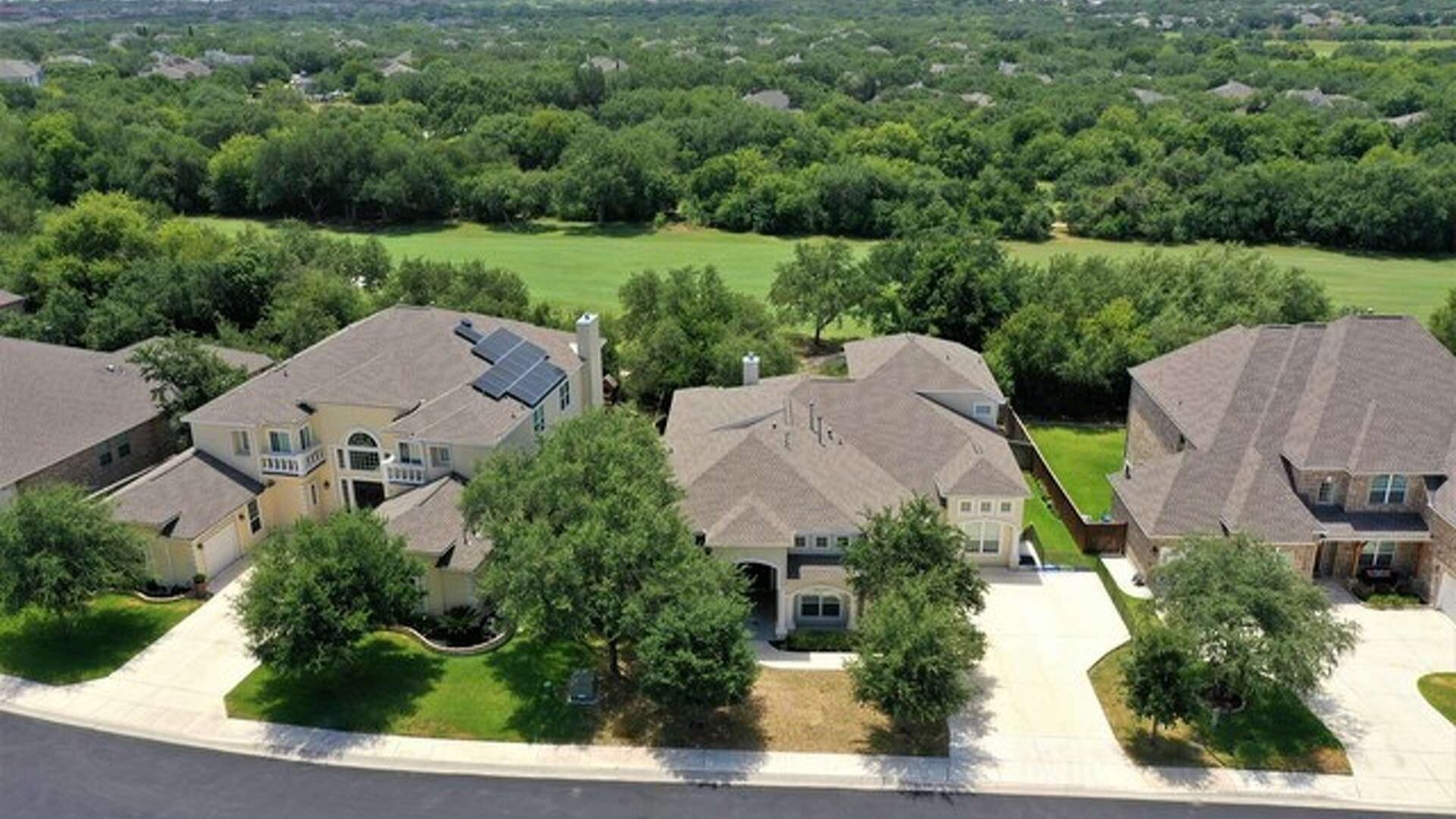
Alamo Ranch and the Potranco corridor attract Austin transplants who want active new construction, strong value, and Northside ISD at price points below what the Hill Country and north SA corridors command. Further from Austin by distance but a strong choice for buyers whose priority is the San Antonio market specifically.
Not sure which of these fits your family’s specific situation?
The Suburb Match Quiz takes about three minutes and gives you a personalized recommendation.
The Where to Live in San Antonio page maps the full city with community types, price ranges, and school districts. It’s a great place to start before you start comparing specific suburbs.
The Free San Antonio Relocation Guide
If you want everything — suburbs, schools, cost of living, moving timeline, and the mistakes most families make — in one place, the free relocation guide covers it.
Moving From Austin to San Antonio – Frequently Asked Questions
These are the most frequently asked questions that I get from families who are moving from Austin to San Antonio, Texas.
Is San Antonio cheaper than Austin?
Yes, significantly. San Antonio’s median home price has run 40 to 60 percent below Austin’s in recent years. Both cities are in Texas with the same state tax structure, so the advantage is primarily in housing cost and everyday living expenses. The cost of living comparison runs the full numbers.
What is San Antonio like compared to Austin?
San Antonio is a bigger city by population that somehow feels smaller and more navigable than Austin. The pace is slower and less performative. The cultural identity runs deeper. It’s a majority Hispanic city with centuries of layered history and a massive military presence that gives it a very different character than Austin’s tech-and-transplant identity. Most Austin families describe the transition as reset rather than a downgrade.
What are the best San Antonio suburbs for people moving from Austin?
Austin transplants who want familiar suburban character tend to land in Stone Oak, Alamo Heights, or Boerne. Those who want space and a Hill Country feel (which is often what drew them to Austin’s outskirts in the first place), often choose New Braunfels, Bulverde, or Fair Oaks Ranch. The suburb quiz narrows it down based on your specific priorities.
Will I miss Austin after moving to San Antonio?
Depends on what you valued most about living there. The music scene and specific Austin cultural identity are not replicated in San Antonio. The tech job concentration is smaller. What San Antonio offers that Austin has increasingly lost: affordability, a slower pace, and a city that hasn’t been consumed by its own growth. Most people who make this move for lifestyle reasons rather than purely financial ones find they miss specific Austin things but don’t miss the daily reality of living there.
How far is San Antonio from Austin?
About 80 miles via I-35, which runs about 1.5 hours in normal traffic. The corridor between the two cities has grown steadily and New Braunfels sits roughly halfway. It’s a popular choice for families who need regular Austin access but want San Antonio prices.
More San Antonio Relocation Guides
Wherever you’re moving from, the starting point is the same: understanding which part of San Antonio fits your family before you start searching.
San Antonio Relocation Hub · Moving from California · Moving from Austin · Moving from Dallas
Moving from Colorado · Moving from Houston · Moving from the Pacific Northwest · Moving from New York · San Antonio vs. Austin
Ready to Make the Move from Austin to San Antonio?
You already know Texas. You know the heat and the driving and HEB and property taxes. The question is which part of San Antonio fits your life after Austin. And that’s a conversation worth having before you start searching listings.
I’ve helped families make this exact move and I know both cities well. Let’s talk through your commute, your schools, your budget, and your timeline.
Schedule a Free Relocation Call
📞 210.236.2393 · ✉️ tammy@livinginsatx.com
Explore more: San Antonio vs. Austin · San Antonio Cost of Living · Stone Oak · New Braunfels, TX · San Antonio Suburbs · Where to Live in San Antonio
Tammy Dominguez | San Antonio Realtor® & Relocation Specialist | License #684278 | Realty United, LLC