← Back to San Antonio Relocation Hub
Moving from California to San Antonio, Texas
The financial case for leaving California is obvious. What most families don’t figure out until they’re here is which part of San Antonio actually fits the life they were trying to build in California.
This video walks you through what to expect when moving from California to San Antonio: the cost of living, property taxes, lifestyle shifts and where to live when moving to San Antonio, Texas.
Why California Families Are Choosing San Antonio
The math is usually what starts the conversation. A family in the Bay Area, Los Angeles, San Diego, or Sacramento runs the numbers on what their housing budget buys in San Antonio and the gap is surprising — in the best possible way. A budget that buys a median or below-median home in California buys a larger, newer home in one of San Antonio’s most desirable school districts with room to spare.
Add no state income tax to that picture, factor in lower everyday costs, and the financial case for making this move tends to make itself. The families I work with from California have usually done this math already before they ever reach out. They’re not asking whether San Antonio makes financial sense. They’re asking which part of San Antonio makes sense for their specific family.
That’s the question this page is built to answer.
What Actually Changes When You Move Here
The Housing Budget Hits Differently
This is the one that surprises people even when they think they’re prepared for it. Seeing the numbers on paper is different from walking through a 3,800 square foot home in a top school district in Boerne or Stone Oak and realizing what your California budget actually buys here.
The important number to run alongside the purchase price is property taxes. Texas funds local government largely through property taxes rather than income taxes, and the rate runs between 2% and 2.5% of assessed value annually depending on the county and school district. On a $500,000 home that’s $10,000 to $12,500 per year. This is money that needs to be in your monthly budget calculation from the start. The San Antonio Cost of Living guide covers this in full with county-by-county comparisons.
The San Antonio property tax guide also breaks down how rates vary by county and school district and explains what to look for in any specific property you are considering.
Traffic Is Lighter, But Distance Is Real
San Antonio is not a walkable city. You will drive everywhere. Most California families adapt to it quickly because even with the driving, the total commute times in San Antonio are shorter than what they left.
The thing to understand about San Antonio’s size is that where you live relative to where you work matters enormously. The city covers over 460 square miles. A suburb that looks close on a map might be a 45-minute drive from your office depending on which direction you’re going. Do the commute research before you fall in love with a neighborhood.
HEB Will Change Your Life
This sounds like an exaggeration. I promise, it’s not. HEB is a Texas-based grocery chain that has built a loyalty among Texans and relocating families that no grocery store in California quite replicates. Better produce, better prices, better prepared foods, better experience. Nearly every California family I’ve worked with mentions it within the first few weeks of living here. It’s a small thing that contributes more to daily quality of life than you’d expect.
Texans Are Genuinely Friendly
This one catches people off guard more than anything else that isn’t on a spreadsheet. The daily interactions at the grocery store, at a restaurant, with neighbors, are warmer and more courteous than most California transplants are used to. It’s just the normal life here, and most people find it a huge quality-of-life improvement that they hadn’t thought to research.
What California Families Ask Most Before Making This Move
What About the Heat?
San Antonio summers are real. June through September, temperatures above 100 degrees are common. The humidity is not as extreme as Houston but it’s present, and it makes the temperature feel higher than dry California heat at the same number. You will run your air conditioning from March through October.
The flip side: winters are mild, rarely dropping below freezing for more than a day or two, and spring and fall in San Antonio are genuinely excellent. Most transplants end up saying, “it’s an adjustment but you get used to it” within their first full year.
What About Severe Weather?
San Antonio gets severe thunderstorms in the spring, sometimes including significant hail. This is definitely different from California weather patterns and has some implications — hail damage is common enough that roof age and condition matters more in home inspections here than it does in California, and home insurance costs reflect the storm risk. Budget for it and know what you’re inspecting before you close.
What About the Power Grid?
The February 2021 winter storm — snowmageddon, as Texans call it — put the Texas power grid on the national radar and California buyers ask about it regularly. Here’s the reality: in 20+ years of living in San Antonio, that event was one occurrence. It was a historic, once-in-a-generation weather event that hit infrastructure unprepared for those conditions. Since 2021 there has been significant weatherization work done on the grid and regulatory changes implemented. It’s a fair question and worth understanding — but it shouldn’t be the deciding factor in a relocation decision any more than California earthquake risk should be.
What About Snakes and Bugs?
There are YouTube videos made specifically to scare people about Texas wildlife. They do their job. The reality is more mundane: yes, Texas has snakes and bugs. So does California. You will encounter both in a new way if you move to a property with land. You will barely notice either if you’re in a suburban community. The families I’ve moved to Boerne, Bulverde, and New Braunfels are not living in fear of wildlife — they’re living their lives.
Is There Anything to Do There?
San Antonio is the seventh largest city in the United States. The cultural diversity here — a city that is majority Hispanic with deep ties to Mexican, Tejano, and Spanish heritage alongside military culture, a growing arts scene, and an expanding food landscape — creates something genuinely different from what most people picture when they hear “San Antonio.” The River Walk is the tourist version of the city. The rest of it — the neighborhoods, the restaurants, the music, the festivals, the proximity to the Hill Country — is what people who live here actually experience.
It’s not Austin. It’s not Los Angeles. It has its own character, and most California transplants find that character more substantial and more surprising than they expected.
Where California Families Actually End Up in San Antonio
The conversations I have with California buyers most often end up in these areas:

Boerne
The most consistent first ask from Northern California buyers. Hill Country scenery, a real downtown with walkable character, top-rated Boerne ISD schools, and a comfortable lifestyle pace. About 30 to 40 minutes from San Antonio. The trade-off is price. Boerne runs higher than most SA suburbs, with a longer commute, if you work in San Antonio.
Families who want Hill Country character with a slightly shorter commute to the city often find Helotes and Bulverde hit the right balance between landscape and access.

Stone Oak
North San Antonio’s most established suburban area. Northside ISD and NEISD schools, polished retail and dining immediately accessible, shorter drives to most San Antonio employment areas. Suits buyers who want the full suburban convenience package with strong schools and don’t need Hill Country character to be happy.

Bulverde
More space, semi-rural character, Comal ISD, north of the city toward the Hill Country. A middle ground between Stone Oak’s suburban convenience and Boerne’s Hill Country commitment. Suits buyers who want more land and a quieter feel without the full Boerne price tag or commute.

New Braunfels
Strong draw for buyers from Northern California who want river access, outdoor recreation, and genuine town character. The Guadalupe River, a real historic downtown, Comal ISD, and proximity to both San Antonio and Austin. Runs 35 to 50 minutes from most San Antonio destinations.
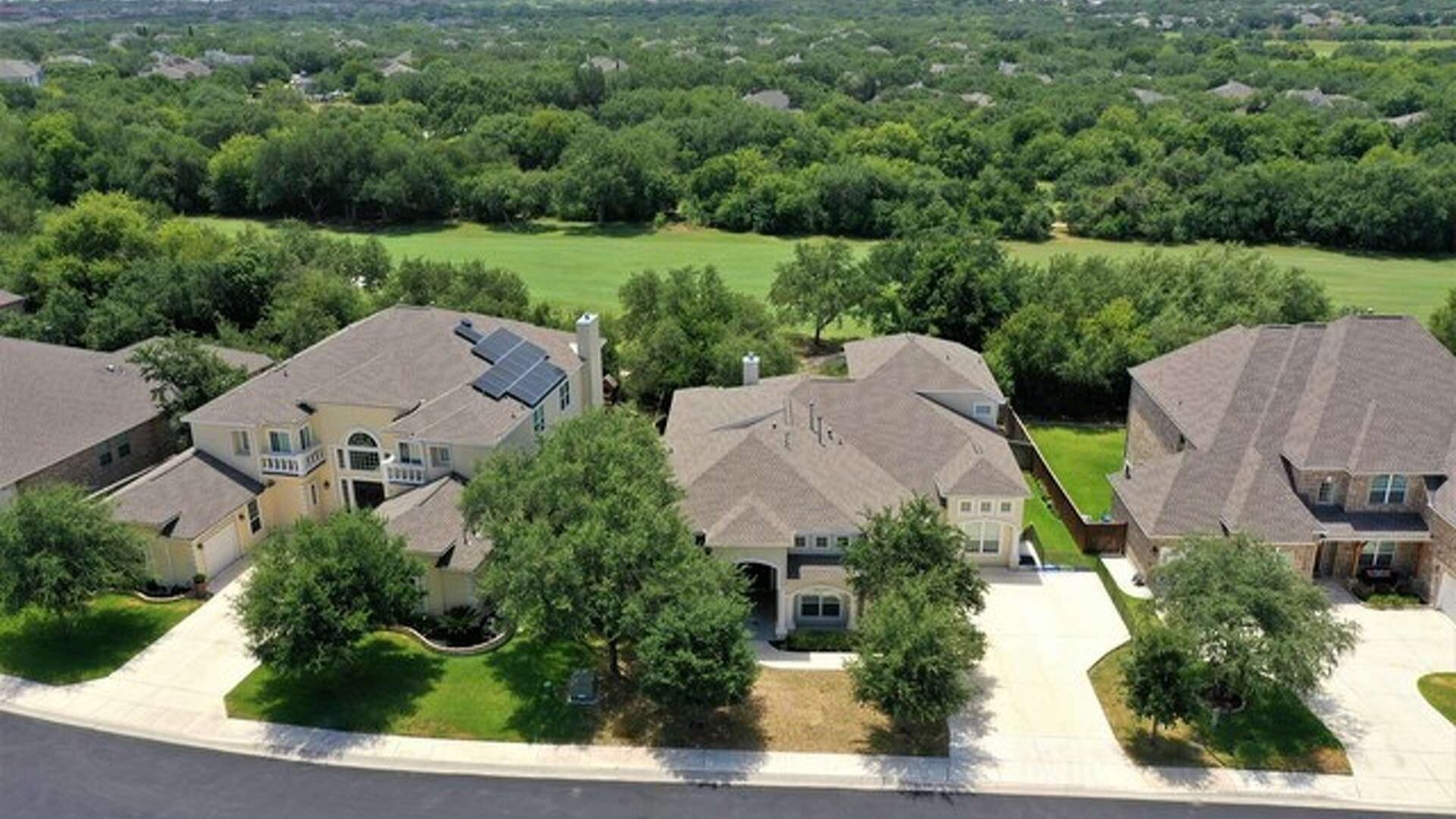
Alamo Ranch and the Far West Corridor
Strong value, active new construction, Northside ISD, good Lackland access. Suits buyers whose priority is newer construction at accessible prices in a community with full suburban amenities.
The far west San Antonio corridor and the 1604/Potranco area offer the most active new construction inventory in the metro at accessible price points with strong Northside ISD access.
Not sure which of these fits your family’s specific situation?
The Suburb Match Quiz asks nine questions and gives you a personalized recommendation in about three minutes.
The Free San Antonio Relocation Guide
If you want everything (suburbs, schools, cost of living, moving timeline, and the mistakes most families make), all in one place, the free relocation guide covers it.
Get the Free San Antonio Relocation Guide
The Where to Live in San Antonio page maps every part of the city with community types, price ranges, and school districts. It’s a great starting point before you narrow to specific suburbs.
Moving From California to San Antonio – Frequently Asked Questions
These are the most frequently asked questions that I get from families who are moving from California to San Antonio, Texas.
Is San Antonio a good place to move from California?
For families running the financial math, it is one of the strongest domestic relocation options available. No state income tax, housing that costs a fraction of most California markets, and a wide range of community types from Hill Country small towns to master-planned suburban communities. There are of course trade-offs: summer heat, car dependency, and a more spread-out city. But, for most California families making this move, the financial and quality-of-life picture comes out substantially ahead.
How much cheaper is San Antonio than California?
The gap depends on which California market you are leaving. Bay Area and Los Angeles families typically find their budget buys two to three times more home in San Antonio’s top school districts. Sacramento and Inland Empire buyers see a smaller but still meaningful gap. Beyond housing, eliminating California’s state income tax changes the monthly budget picture. The cost of living guide runs the full comparison.
What are the best San Antonio suburbs for California transplants?
Boerne and New Braunfels are the most consistent suburbs for California families who want Hill Country scenery, larger lots, and an active outdoor lifestyle. Helotes and Fair Oaks Ranch offer similar character closer to the city. Budget-focused California families often find Alamo Ranch and Bulverde deliver the best value per square foot in a strong school district.
Will I experience culture shock moving from California to Texas?
Some, yes. Texas political culture differs from California’s. The driving-dependent lifestyle is an adjustment for anyone coming from walkable California cities or suburbs with good transit. The heat from June through September is more intense than most California climates. On the other side: people are warmer and more courteous in daily life, the pace is slower, and the community feel in San Antonio’s suburbs is something most California families find better than what they left.
Do I need to visit San Antonio before buying a home there?
It is strongly recommended if your timeline allows it. San Antonio’s different communities feel different in person in ways that online research cannot fully convey. Driving commute routes at real commute hours, spending time in specific suburbs, and getting a feel for the scale of the city is valuable before committing to a specific area. That said, many California buyers do purchase remotely with good results when they have done thorough research and have a good sense of their priorities. The guide to buying a home remotely covers exactly how that process works.
More San Antonio Relocation Guides
Wherever you’re moving from, the starting point is the same — understanding which part of San Antonio fits your family before you start searching.
San Antonio Relocation Hub · Moving from California · Moving from Austin · Moving from Dallas
Moving from Colorado · Moving from Houston · Moving from the Pacific Northwest · Moving from New York · San Antonio vs. Austin
Deciding between Boerne and New Braunfels? Full comparison here →
Ready to Figure Out Which Part of San Antonio Fits Your California Family?
Most of my California clients have already done the financial math before they reach out. The question they’re trying to answer is which part of San Antonio makes sense for their specific family. That’s exactly the conversation I’m here for.
I’ve helped families relocate from the Bay Area, Los Angeles, San Diego, and Sacramento. I grew up just outside San Antonio in Seguin, have lived here for 20+ years, and specialize in out-of-state family relocation.
Schedule a Free Relocation Call
📞 210.236.2393 · ✉️ tammy@livinginsatx.com
Explore more: Moving to San Antonio · San Antonio Cost of Living · San Antonio vs. Austin · Boerne, TX · Texas Hill Country Living · Where to Live in San Antonio
Tammy Dominguez | San Antonio Realtor® & Relocation Specialist | License #684278 | Realty United, LLC